 Colors
  View Books


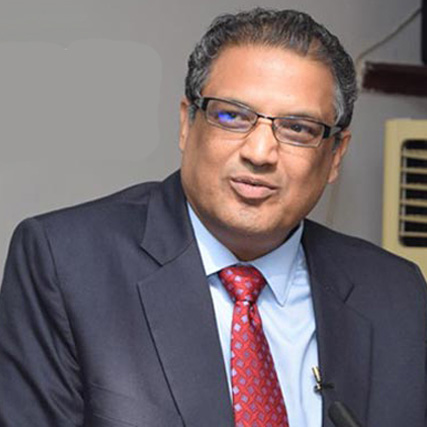

Nawaz Sharif is one of South Asia’s most senior and experienced political leaders. Apart from being a three-time Prime Minister and an important stakeholder in the present system, he has also been, over four decades, one of the most significant witnesses to friendships and confrontations between the establishment and civilian rulers. Nawaz Sharif is a very deep person; without his consent, you cannot extract what lies in his heart. As a humble student of journalism, I repeatedly had the opportunity to meet him dozens of times and, in my own way, tried to understand his core thinking and ideas.
Nawaz Sharif is a very patient man with a soft tone, but if he is angry with someone, he cannot hide it. A redness becomes visible on his fair-complexioned face, and his visitor immediately understands that he is displeased. Otherwise, generally, due to his innocent face and expressions of surprise, visitors take him to be a naïve person. The innocence on his face and his habit of appearing unaware despite knowing everything lead many people into the misconception that “Mian Sahib is so simple.” In my view, however, this very natural style not only makes him popular among people but also conceals the boundless depth that exists within him.
Admitting my own intellectual limitations, I submit that if one examines Nawaz Sharif’s circumstances and events in today’s era, there is no hesitation in saying that Nawaz Sharif’s real views on politics, the global landscape, and Pakistan’s internal issues are quite different from those he appears to hold today. The conditions he is currently passing through and has adopted are contradictory to his original ideas. In fact, to speak plainly, it is clearly visible that temporary expediencies have overpowered his core thinking. And when, under the pressure of expediencies, you compromise on your core thinking, contradictions inevitably emerge. This contradiction is evident in Nawaz Sharif’s current politics.
For a long time, Nawaz Sharif’s dream was to end conflict and hostility with India so that both countries could focus on their economic development. In this regard, he invited Indian Prime Minister Vajpayee and later Prime Minister Narendra Modi to Pakistan. When Prime Minister Vajpayee was to come to Pakistan, the establishment of that time, right-wing parties, and an ideological newspaper formed a front against him. Supporters of Jamaat-e-Islami resorted to vandalism; baton charges were carried out and tear gas was used, yet Nawaz Sharif stood firm.
When he became Prime Minister for the third time, General Musharraf’s Kargil misadventure was on his mind. Therefore, regarding terrorist incidents taking place inside India, he had “independent” and “impartial” investigations conducted through the Intelligence Bureau of that time, which indicated that the operation was carried out by “our own side.” The internal story of a meeting related to this was named “Dawn Leaks,” and eventually, due to disagreements, Nawaz Sharif was gradually ousted by the establishment of that time.
Nawaz Sharif also made the major decision of appointing General Bajwa as Army Chief because General Bajwa, like Nawaz Sharif, was in favor of normalizing relations with India. In today’s situation, Nawaz Sharif has congratulated the establishment and the Prime Minister on winning a war against India, and for a long time he has not spoken of friendship with India. Has he revised his opinion about Modi and India and adopted the establishment’s viewpoint—that until India gives us parity, the Tit-for-Tat formula is the correct one? Apparently, it seems that for now he has not opposed this formula. However, a skeptic would feel that Nawaz Sharif’s real views on Pak-India relations are the same as before, and that his current silence is merely a temporary expediency.
The second point regarding core thinking and temporary expediency is Nawaz Sharif’s policy of prioritizing the economy. He has always considered the economy to be the key to the country’s development, strength, and prosperity. He must have repeatedly advised his government, which has been in place for the past two and a half to three years, of the same. But the reality is that for the last two and a half years, the state and the government’s first priority has been security and defense, and then the second priority has been success in foreign policy.
The state has achieved considerable success on both these fronts, which Nawaz Sharif continues to acknowledge. Although there has been significant stabilization in the economy, neither has the wheel of industry begun to turn, nor has foreign investment arrived, nor do prospects of a notable increase in exports or growth rate appear in the near future. Nawaz Sharif has always believed in Ends rather than Means; therefore, he is currently a victim of temporary expediencies regarding economic policies. Whatever is happening—or not happening—does not align at all with his original thinking.
In his long political career, Nawaz Sharif has fought direct political battles with two political parties. First, his target was the Pakistan Peoples Party, and now his issue is with Imran Khan and Pakistan Tehreek-e-Insaf. In the long battle with the Peoples Party, he employed pressure and incentives—both carrot and stick—in accordance with his personality, and left the Peoples Party wiped out in Punjab.
On one hand, he was General Zia’s favored blue-eyed man, and on the other hand, according to the late Pir Pagara, he secretly provided funds in 1986 for the reception of Benazir Bhutto. Similarly, when the Lahore High Court delivered the infamous Justice Qayyum verdict declaring Benazir Bhutto disqualified and ordering her arrest, it was ensured beforehand that Ms. Benazir Bhutto was abroad so that she would not be arrested, though she would remain disqualified. This matter was entirely in line with his thinking, because Nawaz Sharif’s politics has two doors: from one door he attacks, and from the other he sends a message of reconciliation.
However, in the current confrontation with Tehreek-e-Insaf, the government’s attitude does not correspond to Nawaz Sharif’s core thinking and method. In the past, Nawaz Sharif’s approach toward Imran Khan was conciliatory; he even visited his residence in Bani Gala. But this time, he is not prepared to give Imran Khan any path. Is this because of the excessively vulgar attacks from Tehreek-e-Insaf and Imran Khan, or has he adopted a stance of temporary expediency in order to remain in harmony with the establishment?
Apparently, it seems that in this matter his views have changed significantly and that he is aligned with the establishment. However, at times his forceful and open statements resemble a Freudian slip—that is, an involuntary verbal lapse (when a person unconsciously says something that reflects his inner voice and thoughts). Nawaz Sharif does have a temporary reconciliation with the establishment, but this also poses a challenge to his political legacy. Obviously, he would prefer to be remembered as a popular democratic leader, and he would want to remove the garland of dilemmas that temporary expediencies place around his neck. But as of today, up to his 78th birthday, this garland must be feeling to him like a bone stuck in the throat.
