 Colors
  View Books


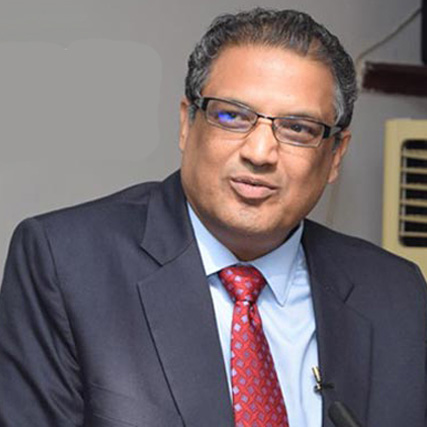

Esteemed dignitaries and respected audience!
The focus of these remarks is the author, the book, and the holders of power.
The author, Mr. Hussain Naqi, truly lives up to his name. The courage of refusal of Hazrat Imam Hussain (RA) and the patience and tolerance of Hazrat Imam Naqi (RA) are clearly reflected in his personality. Whether it was the Banu Umayyah or the Banu Abbas, the Imams always kept the banner of truth and righteousness raised. Hussain Naqi is a journalist, yet in today’s times he has remained a voice of resistance against the Pakistan Peoples Party, the military, and religious parties—and as a consequence of this “crime,” he even endured kissing the gallows.
Comparison is not ideal, but for the sake of understanding and explaining, allow me to say that Hussain Naqi is today’s Minhaj Barna and today’s Nisar Osmani, who never hesitate to speak whatever is principled, democratic, and true. Stopping Bhutto at the height of his absolute power is a living tradition of Hussain Naqi’s self-respect. Had he been in France, he would have attained the stature of Jean-Paul Sartre, who stood by the truth during the Algerian civil war and compelled President de Gaulle to bow. Had Hussain Naqi been a woman, he would have enjoyed equal respect to Simone de Beauvoir, who played an immortal and indelible historical role for women’s freedom and equality. Had he been in Britain, he would have been called Bertrand Russell because Russell was exiled due to his ideas—just as Hussain Naqi was exiled from Karachi due to his ideas. In today’s times, Hussain Naqi is a blessing, because only a few symbols of the sanctity of words and freedom of expression remain.
The book, “Mujh Se Jo Ho Saka” (Whatever I Could Do), is a beautiful blend of his birthplace Lucknow and his adopted homeland Punjab. It contains a captivating combination of the delicacy and subtlety of Lucknavi Urdu and the purity of Punjab. Through modern expression and critique, Hussain Naqi has presented an analysis of history, politics, and society. From the life of Lucknow, his ancestors, and their thoughts and impressions, many new dimensions of the causes of the creation of Pakistan emerge. The book “Mujh Se Jo Ho Saka” is Hussain Naqi’s prose divan, where every sentence in itself is a complete ghazal. Each word of this ghazal is an encyclopedia of personalities, events, and incidents of India and Pakistan. This book truly deserves to be called “Kitab Sahib” (a book of stature), because it is the chronicle of a truthful, honest, and enlightened individual—one who has the courage to disagree with the policies of his beloved and respectable father, and also the capacity to come out on the streets against cruel dictators.
After the author and the book, let us now talk about the holders of power. Hussain Naqi and the individuals present on this stage have always advocated democratic freedoms, democratic attitudes, human liberties, and ethical conduct. In today’s fragile circumstances and changing situation, it is necessary to analyze matters in the context of history.
One hundred and sixteen years ago, when India was under British rule, in 1909, for the first time a promise was made to the local population that they would no longer remain slaves but would be governed by their own representative government. This historic announcement is known as the Minto–Morley Reforms. As a result of these reforms, eight years later, in 1917, the Secretary of State Montagu issued a clear official declaration that local elected governments would now be established in India. In other words, 108 years ago, democracy was first tasted in this region.
In 1919, to crush the desire for freedom, the Rowlatt Act was enforced, commonly known as the Black Law. Upon its enforcement, Quaid-e-Azam Muhammad Ali Jinnah, declaring it a black law, resigned from the Legislative Assembly. Quaid-e-Azam believed in peaceful constitutional and legal struggle, therefore he adopted resignation as a form of protest, while Mahatma Gandhi launched the Satyagraha, the movement of non-cooperation.
About 106 years ago, the enforcement of this law triggered intense protests in Punjab. From Bradlaugh Hall in Lahore, a procession led by Congress President Satya Pal was taken out, upon which the police carried out a baton charge. Satya Pal lost his life due to this violence. (It should be remembered that Satya Pal built the Gulab Devi TB Hospital on Ferozepur Road in memory of his mother Gulab Devi; its foundation stone was laid by Mahatma Gandhi, and that commemorative plaque still exists in the hospital.)
After Satya Pal’s death, Amritsar Congress leader Saifuddin Kitchlew called for protest, and to suppress this protest, the historic tragedy of Jallianwala Bagh occurred, where three hundred and fifty people were shot dead in public. After the incidents of Lahore and Amritsar, when a wave of anger and protest spread across Punjab, Gujranwala city was bombed to instill further fear. These black laws and the protests against them ignited the spirit of freedom in Bhagat Singh and his companions, who carried out resistance actions in Lahore, Delhi, and even London, engraving India’s freedom struggle in golden words on the pages of history.
In the black Rowlatt Act enacted 106 years ago, the police were granted powers of arrest without warrant, denial of the right to a lawyer, imprisonment for two years without trial, and secret trials instead of open courts. Despite limited freedoms and chains of slavery, Punjab erupted in protest at that time, and eventually the British government was forced to gradually grant freedoms and rights. It was this resistance that led to the Government of India Act 1935, and then, step by step, as a reaction to the black laws of 1919, the sun of August 1947 rose, granting freedom to both India and Pakistan.
Sir!
The purpose of narrating this history is that if 106 years ago, restrictions on democratic freedoms in a colonized India led to such massive protest, then in today’s free and informed world, restrictions on human freedoms will produce severe and destructive consequences. For 116 years, the people of this region have lived within a democratic dream—taking two steps forward and then being forced two steps back. Now it seems that this dream is breaking, and political leaderships in power are gradually surrendering democracy.
The amendments made to the constitution are against the spirit of the 1973 consensus Constitution. The 1973 Constitution is the name of consensus among national, religious, political, and non-political opinions. Was national consensus achieved on the 26th or 27th Amendments? After 106 years of struggle, are we returning again to 1919? Are the Rowlatt Acts returning? Are we once again beginning a new cycle of repetition? Do the Pakistan Muslim League (N) and the Pakistan Peoples Party not realize that judicial independence, parliamentary sovereignty, and civilian rights are being gradually surrendered?
Whatever political game Imran, Asif Zardari, and Nawaz Sharif may be playing, in reality it is the freedoms of the common man that are being eliminated. Imran Khan’s tenure was dangerous for civilian liberties—he surrendered his democratic space. Yet despite disagreeing with Imran, we must remember that the action and reaction following the execution of a political leader consumed 46 years of the country and democracy. May another such tragedy not permanently gather dark clouds over us…
(This speech was delivered at the Alhamra Hall in Lahore at the book launch of renowned journalist Hussain Naqi. Present on the stage were Senator Pervez Rashid, Senator Farhatullah Babar, Farrukh Sohail Goindi, Rabia Bajwa, and Salman Abid.)
