 Colors
  View Books


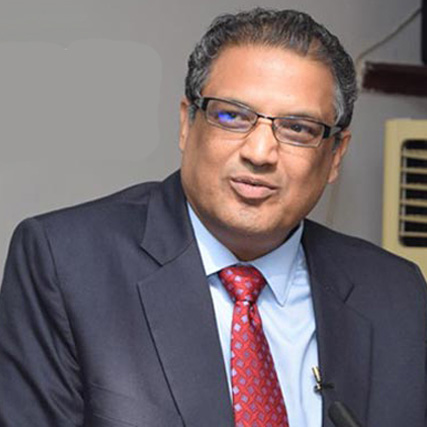

Who would be such an unbeliever as to deny the testimony of the Mahdi of the time—especially a Mahdi whose very name means blessed, fortunate, and auspicious? We all believe in the Day of Judgment, when good and evil will be decided and reward and punishment announced. One Judgment will come at the end of this world, but a lesser judgment is established in every era. In history, the position of every character keeps being determined, and often the court of history is also held in this very world. The tyrants of history are punished here too with blackened words, while the oppressed of history are elevated with the reward of golden letters.
Countless people testify that Zulfikar Ali Bhutto used to say, “I am a traveler of history; history will determine my place.” Former minister Sardar Asif Ahmad Ali and Iqbal Tikka have narrated this quote and Bhutto’s firm faith in the verdict of history many times. Four to five decades have passed since Bhutto’s execution. In the world of history, forty or fifty years is a very short span, yet within this extremely brief time so much testimony has gathered regarding Bhutto’s judicial murder that identifying the culprits and blackening their names forever in history has become very easy.
Mehdi’s testimony becomes credible when the truth of it is supported by the masses. At the launch of his book The Eyewitness in the largest hall of a five-star hotel, a huge gathering was bearing witness to the truth of every word he spoke. My acquaintance with Saeed Mehdi was old in name, but I came to know him not in his days of power, rather in his days of trial. Through a mutual friend, Tahir Khaliq, meetings began. I had the impression that, like many bureaucrats, he would be stern, arrogant, and haughty—but I found him soft-hearted, humble, and modest.
When I reached the ceremony, I thought it would be a gathering of cold-natured, lifeless people who had come merely to show loyalty to a retired bureaucrat. But there was not even space to stand. People had come with their families. It was not just the elite or the privileged; the middle and even the downtrodden classes were visible, distinct in their dress and appearance.
While mentioning his childhood, Saeed Mehdi writes that his father gave shelter in their home to a bureaucrat friend, who fraudulently transferred the house into his own name and expelled them. A baker on Mason Road in Lahore gave refuge to young Saeed Mehdi and his brother. Mehdi remembered the kindness of that poor baker all his life and shared in the joys and sorrows of even his children. This is the Saeed Mehdi I liked very much, and I became convinced of the personal emotion and pain present in his incidents and testimony.
One of my kind teachers often objected that why I ask about Bhutto’s execution in every major interview. My moderate-minded teacher did not agree with Bhutto’s politics and is affiliated with Jamaat-e-Islami. I accept his objection, but some events in history leave effects that last for decades. Bhutto’s hanging is one such tragedy whose effects will remain on Pakistan’s politics until its political, legal, and moral redress is fully achieved.
Saeed Mehdi too was deeply affected by that execution, and by coincidence he is an eyewitness to that most delicate and sensitive part of history. It is another matter that, after forty-six years, the matter has moved from the eyewitness to the unseen eye of Imran Khan. The journey of circles continues; though it began with taking a head, it has now reached taking an eye. Forty-six years ago the witness was Saeed Mehdi; who will be the Mahdi of the present era, and what testimony will he give? The blank pages of history will wait for that writing.
Another aspect of Saeed Mehdi’s personality appeared some fourteen or fifteen years ago. The 2013 elections were approaching, and the return of Nawaz Sharif to power was almost certain. Planning had begun for after coming into government; various experts were called for briefings. In those consultative meetings, Saeed Mehdi, A. Z. K. Sherdil, and this humble writer were included. In those meetings, Saeed Mehdi’s tone was flowery like that of bureaucrats, but his advice was frank and fearless.
Those who sit in leaders’ gatherings know that etiquette permits speaking only when one’s turn comes, and one is heard only when the leader’s glance of favor falls. Astonishingly, even in that disciplined gathering, Saeed Mehdi would repeatedly write his suggestions on slips and keep handing them to Nawaz Sharif. Sometimes he would disagree openly; sometimes he would whisper something in Nawaz Sharif’s ear.
I cannot forget this scene because Saeed Mehdi in those meetings was the same as he is in ordinary life. Remember: the person who appears the same in the gatherings of kings and of faqirs must be free of contradiction and special.
While describing the beginning of his civil service career, he writes that after joining he wanted to meet the commissioner, but the latter was not giving time. By chance, the late Iqbal Tikka—who was then a naib-tehsildar there—came to see him. Mehdi mentioned his worry and disappointment. Tikka Sahib went out, made a phone call to the commissioner, and shortly afterwards the commissioner himself called and invited him to dinner immediately along with Tikka Sahib.
In what Rafiuddin wrote about Bhutto’s last days, Saeed Mehdi has also mentioned a final face-to-face meeting between Muhammad Zia-ul-Haq and Zulfikar Ali Bhutto. This meeting took place at the house of the Chief Martial Law Administrator, where Bhutto arrived suddenly and complained to General Zia about obstacles being created by the administration. General Zia summoned Deputy Commissioner Saeed Mehdi and immediately ordered that this should not happen. But after Bhutto left, he told him to continue the same actions.
Saeed Mehdi writes that in the last days before the execution, Bhutto’s teeth had deteriorated and he repeatedly asked for his dentist, Dr. Niazi, to be called, but his request was not granted. See the twist of fate: at that time the doctor being summoned was a Niazi, and today the prisoner whose eye is damaged in jail is also a Niazi. Destiny indeed shows strange paths.
The most interesting incident of General Zia’s “Zia-ism” (a term coined by Muneer Ahmad, known as Munno Bhai) is that on the day of Bhutto’s execution, when he passed by the central jail, he asked his staff whether Bhutto had been hanged. When the answer was yes, he raised his hands for fateha and said, “Bhutto Sahib was very kind to me; he bestowed many favors upon me, but I was helpless before the court’s decision.”
Saeed Mehdi did not mention taking Bhutto toward the gallows on a stretcher, nor the alleged last words, “Finish it.” How much in these stories was fiction and how much reality? Only the coming time will decide. In any case, one thing is certain: by avoiding storytelling and myth-making, Saeed Mehdi has finally spoken history’s truth.
